
Oncology
Radiation Fibrosis & Scar Management
in Orland Park, IL
Radiation and surgery can leave tissue hardened, tight, and restricted months or years later. Targeted soft-tissue work and scar mobilization soften that tissue and give movement back — even when the treatment is long behind you.
Often paired with related care
What we treat
Conditions
seen in this specialty.
We accept these as primary diagnoses. If you're not sure where your case fits, a 60-minute evaluation maps it correctly on day one.
Radiation fibrosis syndrome
Gradual hardening and tightening of irradiated tissue that restricts movement and can develop or worsen over years.
Restrictive surgical scars
Scars that adhere to underlying tissue after oncologic surgery, pulling on the area and limiting range.
Chest-wall & neck tightness
Restriction across the chest, neck, or shoulder after radiation that limits reach, rotation, and breathing comfort.
Trismus & jaw restriction
Tightness after head-and-neck radiation that limits jaw opening and function.
Pelvic & abdominal fibrosis
Hardened tissue after pelvic or abdominal radiation that contributes to pain and restricted movement.
When to see a PT
Signals that
warrant an evaluation.
If you notice any of these patterns — even occasionally — it's worth a sixty-minute assessment to map what's actually going on.
Tissue that feels hard, leathery, or stuck
Tightness that has appeared or worsened months after radiation
A scar that pulls, restricts, or limits motion
Reduced reach, rotation, or jaw opening
Aching or pulling around an old surgical or radiation site
How we treat it
The clinical playbook
for this specialty.
01—Modality
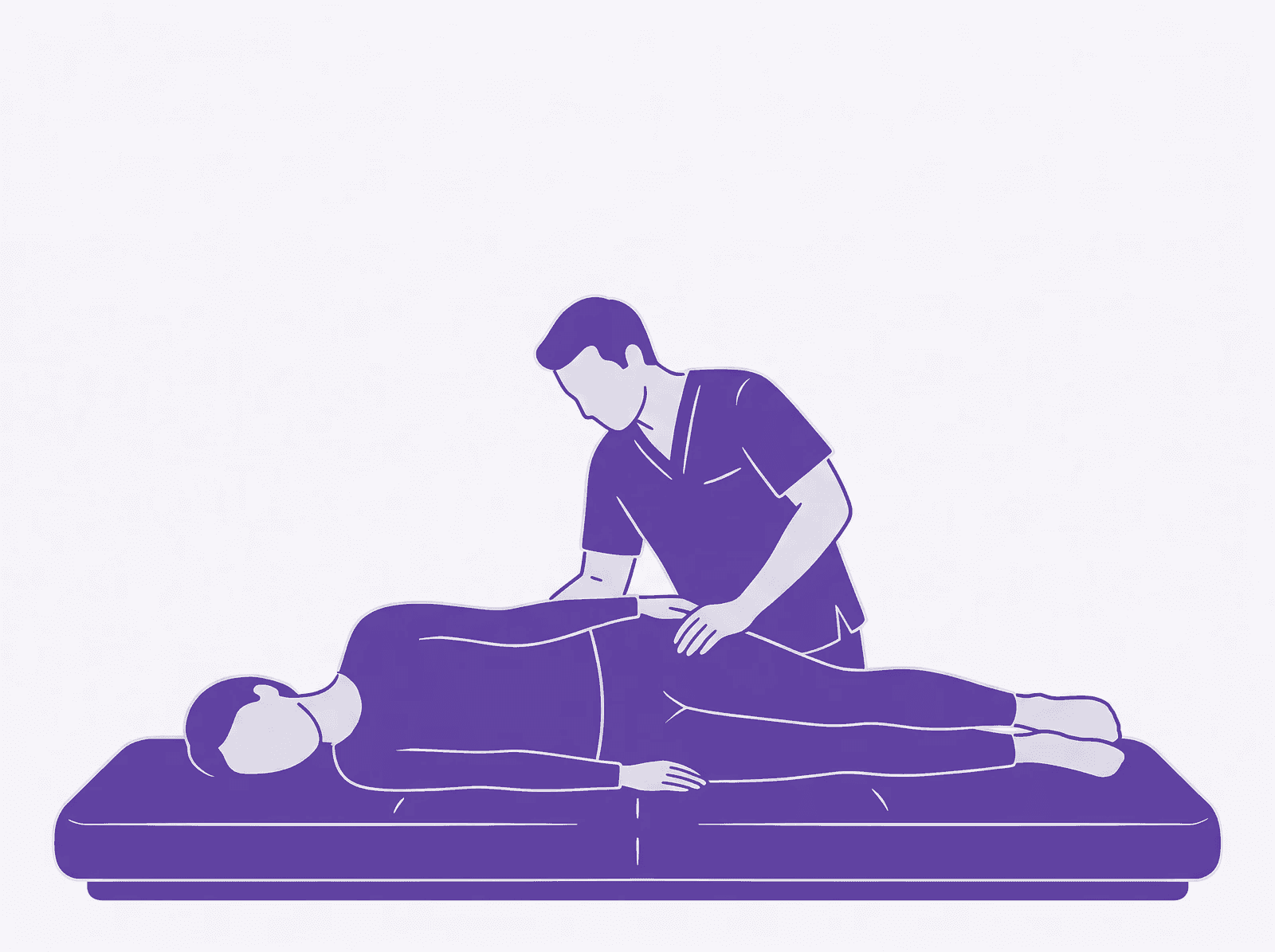
Soft-tissue & myofascial work
Hands-on techniques to soften fibrotic, hardened tissue and restore the pliability radiation takes away.
02—Modality
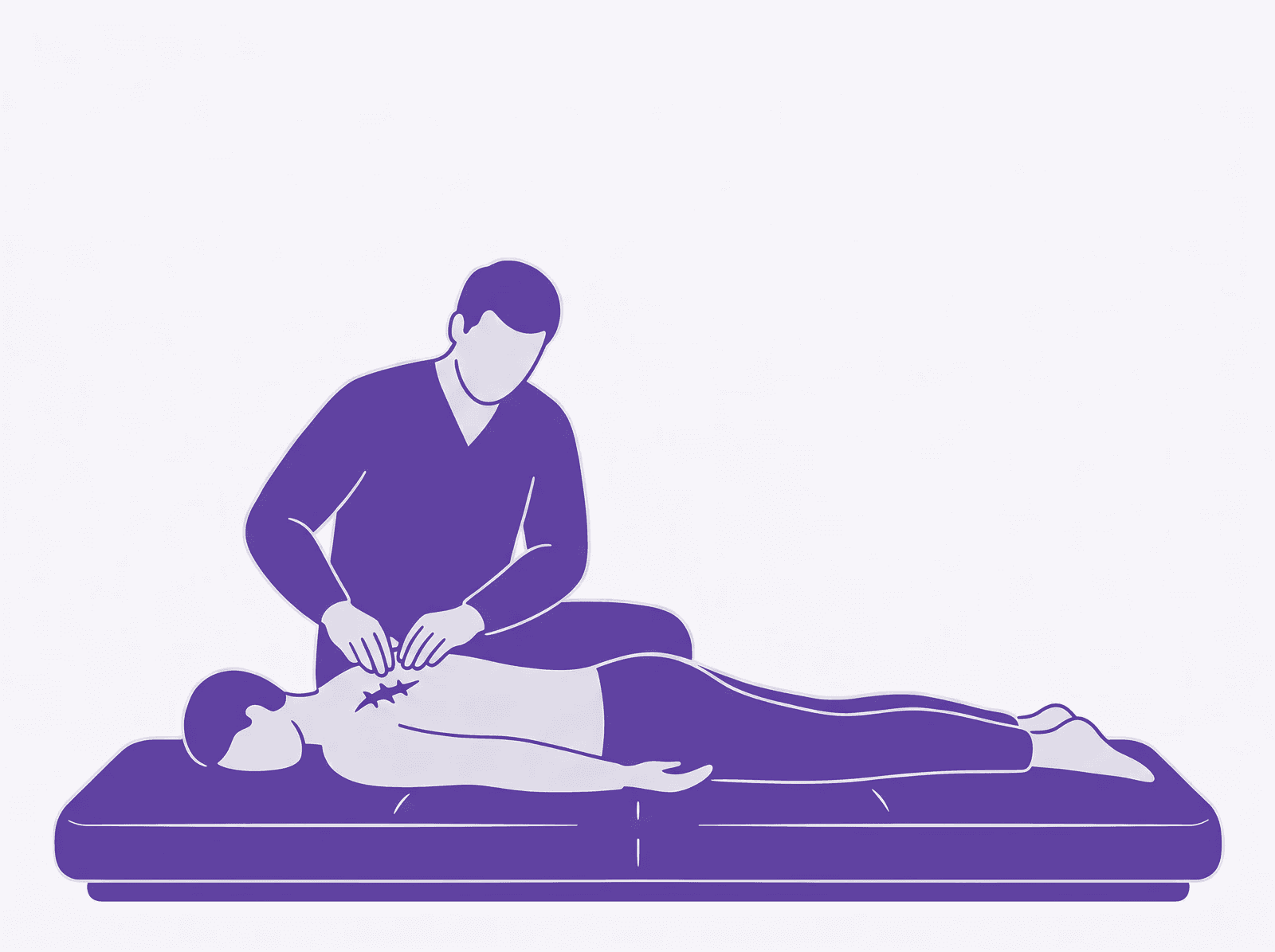
Scar mobilization
Direct work on restrictive scars to free adhesions, reduce pulling, and recover the glide of tissue layers beneath the skin.
03—Modality
Graded loading & stretching
Graduated stretching and loading that lengthens restricted tissue and rebuilds tolerance for movement over time.
Graded loading & stretching
04—Modality
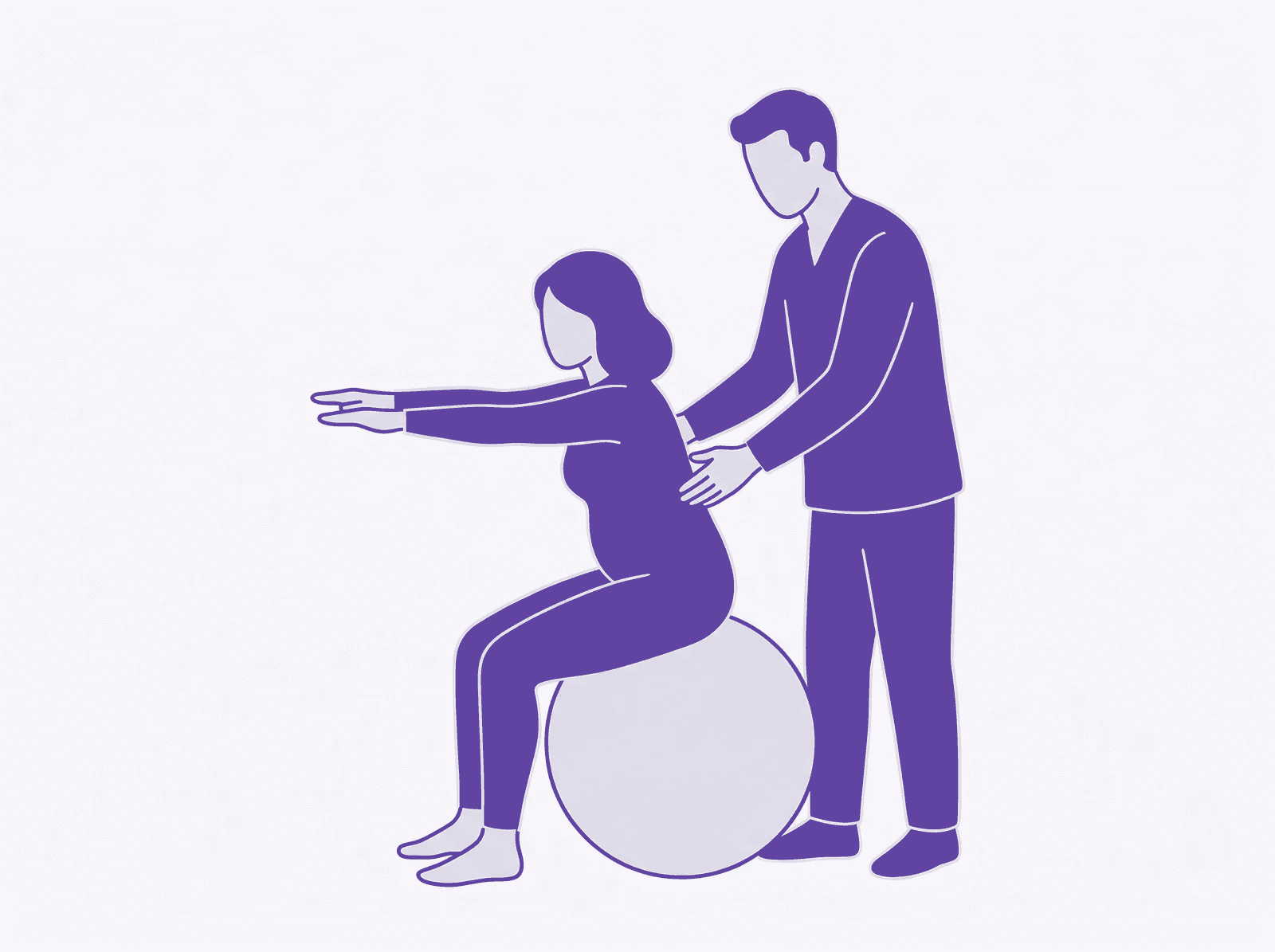
Range-of-motion restoration
Targeted mobility work for the shoulder, neck, jaw, or trunk to reclaim the motion fibrosis has limited.
05—Modality
Skin integrity monitoring
Careful attention to fragile, irradiated skin throughout treatment, with guidance on protecting it at home.

What to expect
The phased timeline
most patients follow.
Honest milestones. Cases vary, but most look something like this. We re-test at every phase so progress is measured, not assumed.
- 01Visit 1
Evaluation
We assess tissue quality, scar mobility, and range of motion, and map exactly where the restriction is coming from.
- 02Weeks 1–4
Tissue softening
Hands-on soft-tissue and scar work begins, paired with stretching. Many patients feel tissue loosen and motion improve within the first few weeks.
- 03Weeks 4–8
Restoring function
As tissue becomes more pliable, we rebuild range and tolerance for the movements and activities the restriction had limited.
- 04Maintenance
Home program
A self-stretching and self-massage routine to keep tissue mobile, since fibrosis can continue to tighten without ongoing care.
Why LORC
Why Lamiaa Hefni
leads this specialty.
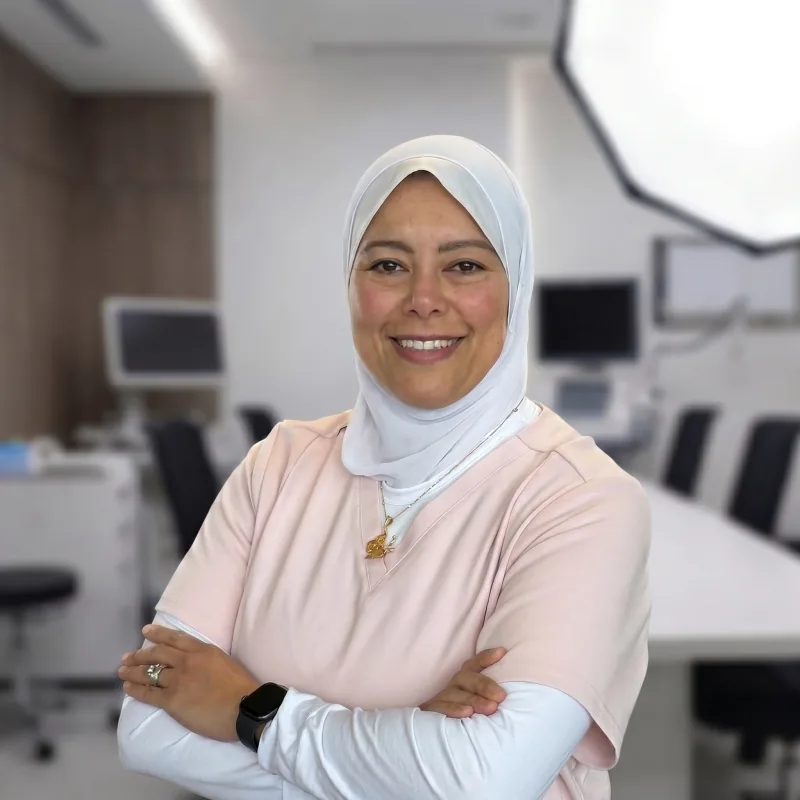
Lamiaa is one of the few CLT-LANA-certified therapists practicing in the southwest Chicago suburbs. The credential — held by roughly one therapist per 100,000 Americans — changes outcomes. That is why patients drive past four or five clinics to see her specifically.
Related services
What patients with this diagnosis
often add to their plan.
Oncology Rehab
Cancer treatment is hard on the body long after it ends. Our oncology rehab rebuilds strength, range of motion, and endurance — and manages the fatigue and deconditioning that survivorship rarely addresses on its own.
Post-Mastectomy Rehab
Breast surgery affects far more than the chest — shoulder motion, scar tissue, cording, and lymphedema risk all follow. We rehabilitate the whole picture so you recover full function, not just incision healing.
Lymphedema Therapy
Most clinics call themselves lymphedema-friendly. Lamiaa Hefni holds the CLT-LANA — the credential roughly 1 in 100,000 Americans is qualified to carry. That is the difference between learning lymphedema and specializing in it.
Common questions
About radiation fibrosis & scar
therapy.
Yes. Radiation fibrosis often develops or worsens slowly over months and years, but hardened tissue still responds to skilled soft-tissue work and scar mobilization long after treatment ends. Older restrictions sometimes take more sessions, but meaningful softening and improved motion are very achievable.
Scar management isn't a cosmetic treatment — it doesn't erase a scar. What it changes is the restriction: the scar becomes softer, more mobile, and stops pulling on surrounding tissue or limiting your movement. Appearance often improves somewhat, but restored function is the goal.
In trained hands, yes. Irradiated skin and tissue are more fragile, so techniques and intensity are adapted accordingly, and we monitor skin integrity throughout. This is exactly the kind of case that benefits from a therapist experienced in oncology rehabilitation.
Illinois allows direct access for an initial evaluation. We coordinate with your oncology and surgical team, and ongoing treatment may require a physician's order depending on your plan, which we help arrange.
Get started
Book your
radiation fibrosis & scar evaluation.
Same-week availability for most new patients. We verify your benefits before your first visit.