
Wellness
Balance & Fall Prevention
in Orland Park, IL
A fall can undo months of recovery. We build the balance, strength, and confidence that keep deconditioned cancer survivors and older adults steady on their feet — and measurably lower the risk of the next fall.
Often paired with related care
What we treat
Conditions
seen in this specialty.
We accept these as primary diagnoses. If you're not sure where your case fits, a 60-minute evaluation maps it correctly on day one.
Deconditioning after cancer treatment
Survivors left weak and unsteady by chemo, radiation, or prolonged inactivity, where balance and strength must be rebuilt together.
Age-related balance decline
The gradual loss of stability with age that raises fall risk and threatens independence — and responds well to targeted training.
History of falls or near-falls
A prior fall is the strongest predictor of the next one. Structured training breaks that cycle.
Chemotherapy-induced neuropathy
Numbness and altered sensation in the feet that disrupts balance and increases the risk of stumbling.
Lower-extremity weakness
Leg weakness that makes standing, walking, and rising from a chair unsteady.
When to see a PT
Signals that
warrant an evaluation.
If you notice any of these patterns — even occasionally — it's worth a sixty-minute assessment to map what's actually going on.
A recent fall or a near-fall you caught in time
Feeling unsteady, especially on uneven ground or stairs
Holding onto furniture or walls to get around
Difficulty rising from a chair without using your arms
Numbness in the feet that affects walking
Avoiding activities for fear of falling
How we treat it
The clinical playbook
for this specialty.
01—Modality
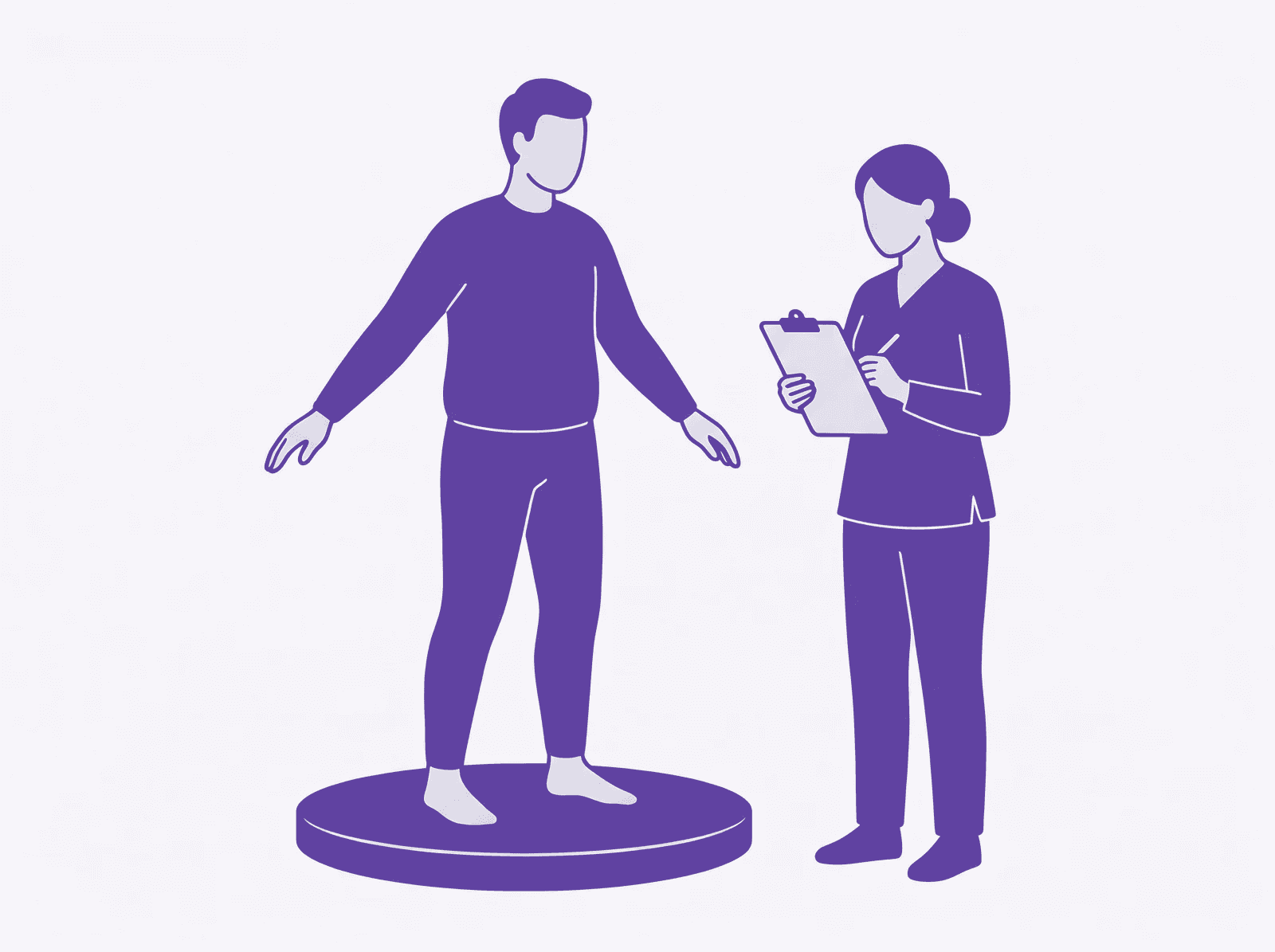
Balance assessment
Objective testing of standing balance, weight distribution, and reaction so we know exactly where the deficits are and can target them.
02—Modality
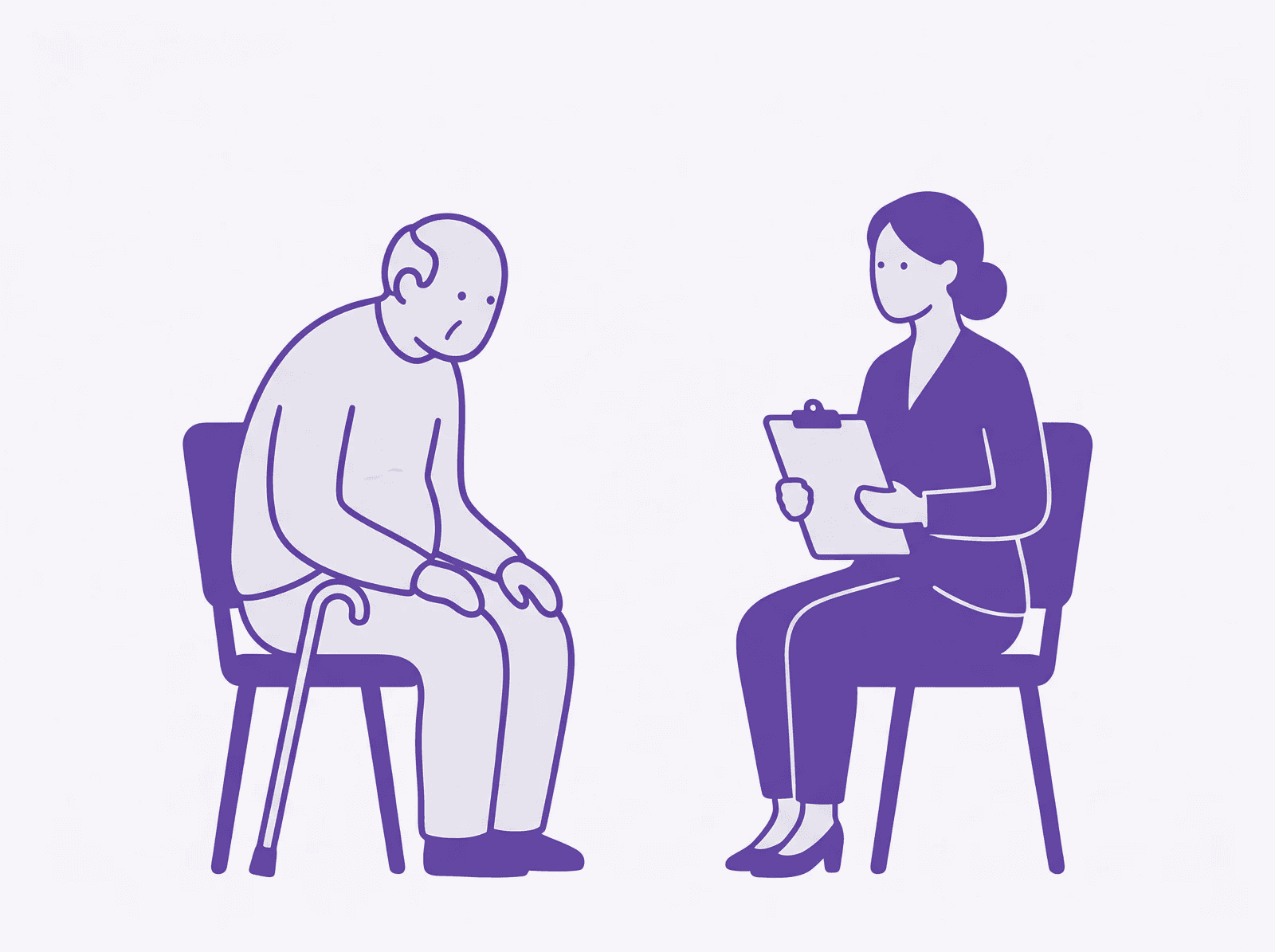
Static & dynamic balance training
Graduated exercises that challenge balance safely — from steady standing to moving, turning, and navigating real-world surfaces.
03—Modality
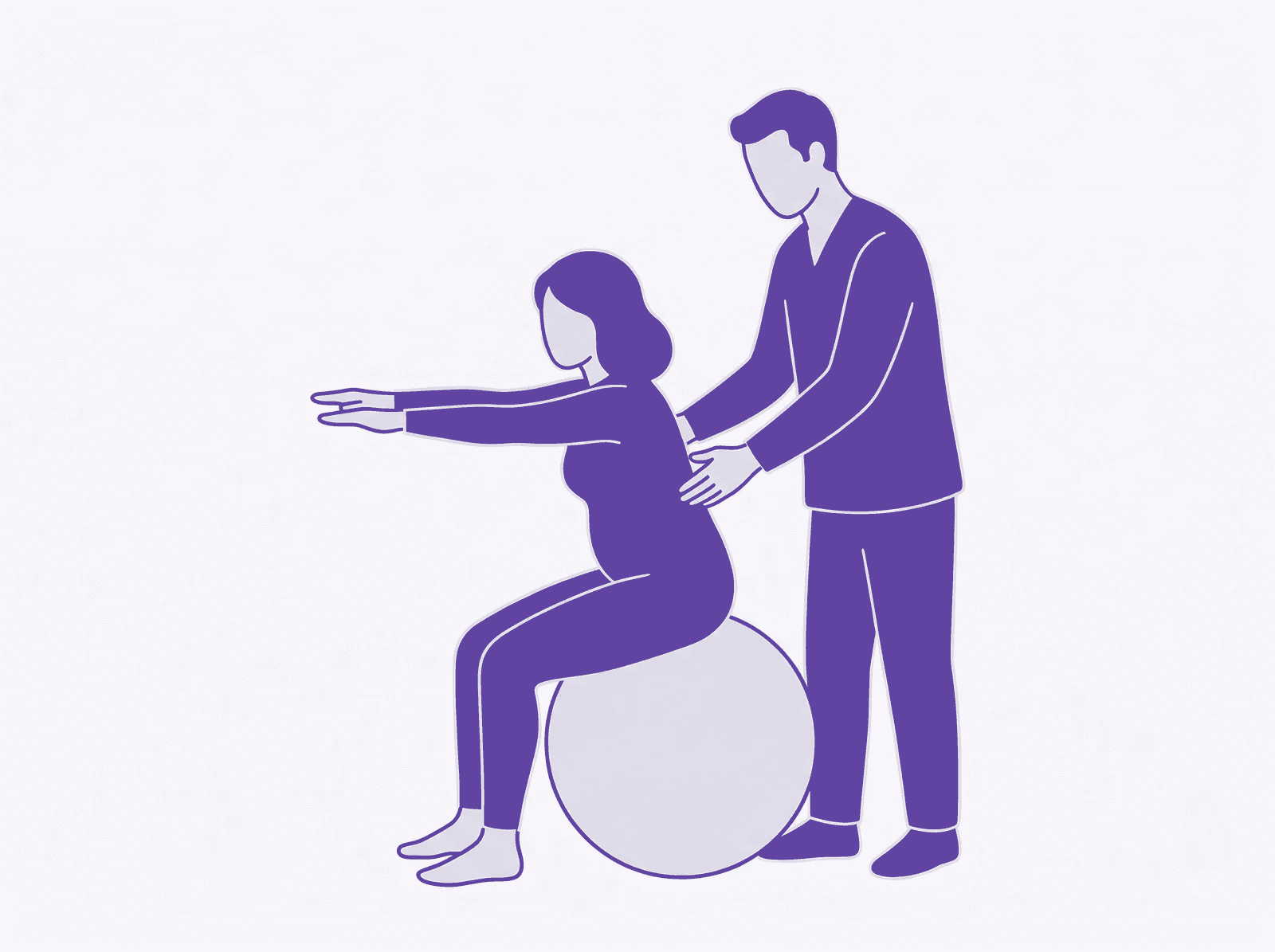
Lower-extremity strengthening
Targeted strengthening of the legs and hips, the foundation of steadiness and the single biggest factor in staying independent.
04—Modality
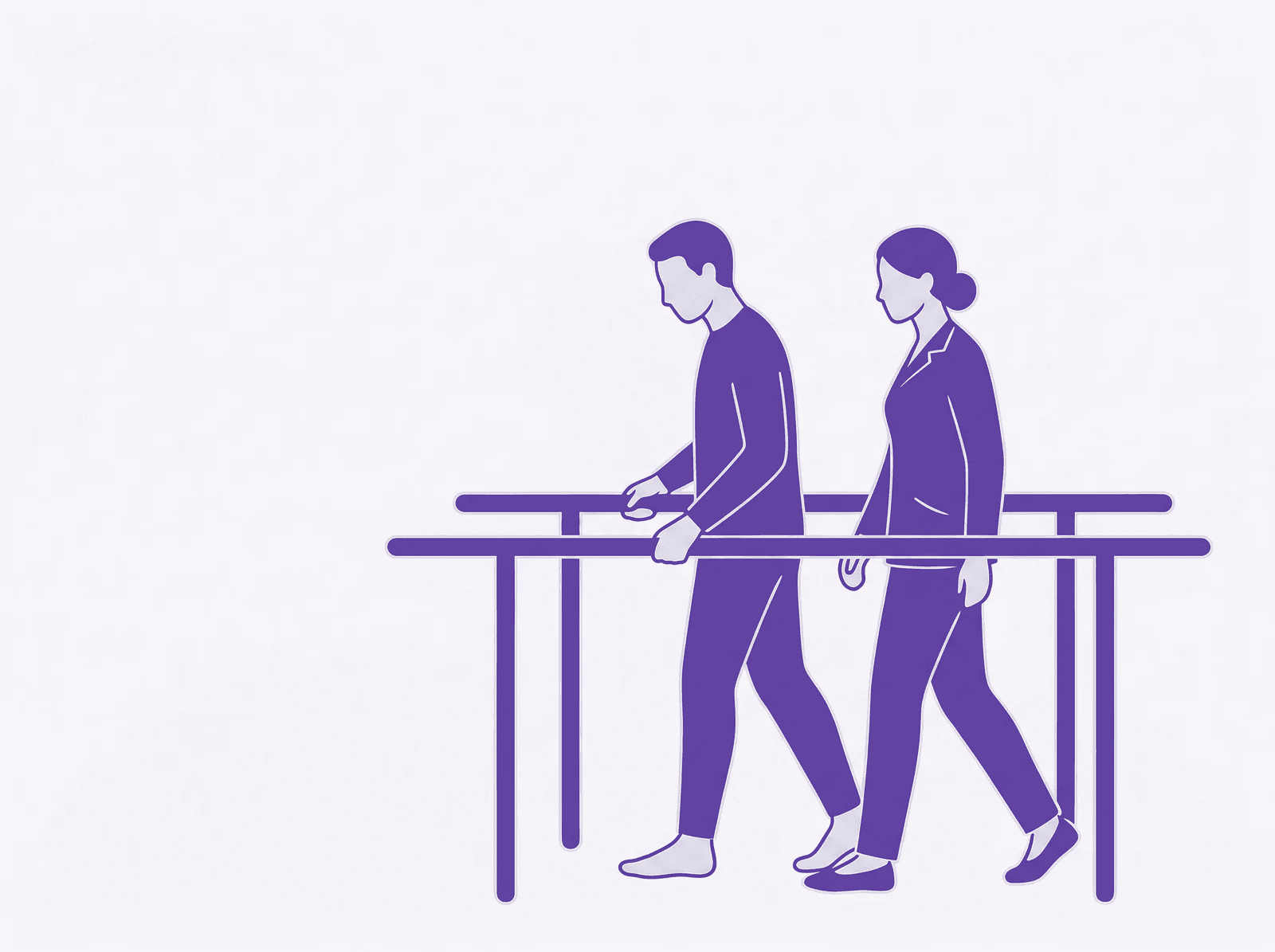
Gait training
Work on walking quality, stride, and confidence, with assistive-device guidance when it's the right fit.
05—Modality
Home safety & fall-risk education
Practical recommendations for reducing hazards at home, plus education on the habits and footwear that lower fall risk.
Home safety & fall-risk education
What to expect
The phased timeline
most patients follow.
Honest milestones. Cases vary, but most look something like this. We re-test at every phase so progress is measured, not assumed.
- 01Visit 1
Evaluation
Balance testing, strength assessment, and a fall-risk review establish your baseline and shape the plan.
- 02Weeks 1–4
Foundation building
Strength and balance work begins, calibrated to your starting point. Most patients notice early steadiness gains within a few weeks.
- 03Weeks 4–12
Graduated challenge
Exercises advance toward real-world demands — uneven ground, turning, dual tasks — as confidence and capacity grow.
- 04Maintenance
Independent program
A home program and home-safety plan to keep the gains and keep you steady long-term.
Why LORC
Why Dr. Omar Hussien
leads this specialty.
Dr. Omar Hussien, PT, DPT, CLT, co-founder and clinical director of LORC, leads balance and fall-prevention care in Orland Park. Many of these patients are cancer survivors left deconditioned or unsteady by treatment — so the program blends fall-risk reduction with the reconditioning survivorship demands, in full one-on-one sessions.

Related services
What patients with this diagnosis
often add to their plan.
Oncology Rehab
Cancer treatment is hard on the body long after it ends. Our oncology rehab rebuilds strength, range of motion, and endurance — and manages the fatigue and deconditioning that survivorship rarely addresses on its own.
Self-Care Education
The goal of good lymphedema and oncology care isn't your last appointment — it's the day you can manage confidently at home. We teach self-MLD, skin care, garment care, and exercise so the gains hold long after treatment.
Surgical Pre-Hab
The stronger you go into surgery, the better you come out of it. Pre-hab conditions your body before your procedure — building strength, mobility, and stamina that translate directly into a faster, smoother recovery.
Common questions
About balance & fall prevention
therapy.
Balance is trainable at any age. It depends on strength, sensation, and coordination — all of which respond to targeted exercise. Research consistently shows that structured balance and strength programs measurably reduce fall risk, even in older and deconditioned adults.
Cancer treatment often leaves survivors weaker and less steady, and chemotherapy can cause neuropathy that dulls sensation in the feet. Both raise fall risk at the very time the body is trying to recover. We combine fall prevention with reconditioning so survivors rebuild strength and stability together.
Balance and fall-prevention therapy is covered by most commercial insurers and Medicare when there are documented deficits or fall risk. We verify your benefits before the first visit and handle the documentation.
Illinois allows direct access for an initial evaluation, so you can schedule directly. If imaging or a physician's opinion is needed, or if your plan requires an order for ongoing care, we coordinate that for you.
Get started
Book your
balance & fall prevention evaluation.
Same-week availability for most new patients. We verify your benefits before your first visit.